18 February 2009

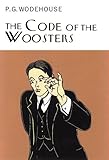
Code of the Woosters

In times of stress and change, we all tend to turn to a particular vice of our own choosing to soothe and relieve. Some choose alcohol, or drugs, perhaps religion, food, sports, or fantasy. My own particular vice is P.G. Wodehouse, probably the greatest 20th century writer of English prose and largely unknown here in the US.

There is something about Wodehouse, particularly his best works, that never fails to make the world seem less grey. His portrayals of an Edwardian idyll that existed, if at all, only on the stage makes his work close to a fantasy escape. It has, in fact, been called "pure male fantasy", in both senses of the word pure, and as such offers the perfect relief after a weary and trying day.

None of his works succeed at this like Code of the Woosters. Published in 1939, the story follows a collection of misadventures of Bertie Wooster, a nice but not overly bright man with more money than sense, as visits Totleigh Towers, home of Sir Watkyn Basset, who is convinced that Bertie is there to steal a silver cow-creamer ... which he is, but also to affect a reconciliation between Gussie Fink-Nottle, noted newt fancier, and Madeline Basset, noted goop. Meanwhile, he gets involved with the secret engagement between Stephanie Bing and The Rev. Harold "Stinker" Pinker. Add in his Aunt Dahlia, who learned many a fruity phrase in her fox hunting days, and Roderick Spode, an amateur dictator who leads a group called The Black Shorts, a snarky scottie, and an officious village constable, and you have the ingredients of a farce on the highest order. And of course through it all is Jeeves, Bertie's valet.

Jeeves is something of a deus ex machina, able to extricate Bertie from any situation, even those worse than death (ie marriage). No matter how intractible or gloomy a problem might seem, Jeeves is there with a solution to reach the required happy ending. Often it takes more than one solution, as in Code of the Woosters, when the problems come fast and furious; what's more, Bertie often has to pay a price for this. The sacrifice may seem trivial, such as losing a pair of purple socks, or rather jarring to our modern sensibilities, as in the novel Thank You, Jeeves. Still, all is well at the end, as it dashed well should be, with Bertie receiving his just reward (by and large, being left alone to live life as he wants to.)

Wodehouse was a master of farce; he often described his novels as musical comedies without the music. In Code of the Woosters he might have achieved his peak. Not only are the various plot threads interwoven in unexpected ways, the characters are vivid and the writing is superb. Wodehouse was a master of wordplay and description, capable of evoking eye-popping descriptions and audible laughs. Each Wodehouse fan has a favorite or list of favorites, and Code of the Woosters has more than its share. My own favorite is an exchange between Bertie and Madeline, discussing Gussie Fink-Nottle:
"A sensitive plant, what?"
"Exactly. You know your Shelley, Bertie."
"Oh, am I?"
Wodehouse is in many ways nothing more than escapism, but it is escapism of the highest order, appreciated by The Oxford Don and the lover of lowbrow comedy alike. As I lay down after a long day, I can reach for one of his works and fall to sleep smiling, regardless of the day. Who could ask for anything more?


For samples of PG. Wodehouse's work via RSS, check out Wodehouse on Dailylit.

A Guest Blogger Post by Richard Burton.

15 February 2009

Graveyard dalliance

I was entertained recently by Neil Gaiman's exuberant tweeting about his receipt of The American Library Association's Newbery Medal for children's literature for his novel The Graveyard Book. I recently read Coraline, and then saw the movie (in 3D!). I think this is one of the few movies that surpasses the book upon which it is based (aside from Peter Bentley's Jaws), in both cases because the author was involved with the scriptwriting - I very much liked the addition of Wybie and his grandmother, and the ecstatic puppetry. Those vampiric Scotties had me laughing out loud. So, when I had the chance to read The Graveyard Book, I took it - the coincidence of the tweets and the movie was not to be avoided.

The Graveyard Book starts out rather traditionally, with the death of the main character's mother and family - but there the similarity to Disney ends. Bod Owens, protagonist of the story, is taken in as an orphan by the residents of the graveyard; most of them ghosts, but that makes no matter to a child. Bod (and the reader) are occupied by Bod's adventures in learning ghostly skills from the dead persons in their crypts and graves; by the time he is a teen, Bod can fade from sight, strike fear into the hearts of men, and greet people in the styles of courtesy from over a thousand years. All of which is mightily entertaining - so much so, that one almost forgets to wonder whatever happened to the assailant who ended the lives of his parents and sister.

But they are not to be forgotten. In time, Bod addresses the threat to his own life and ruins the ending of a self-fulfilling prophecy. And then, the saddest part of the book - reminiscent to me of Susan leaving Narnia behind ... but I'll leave that for you, dear reader, to discover.

Kudos to Gaiman for accomplishing in one small tome two amazing feats; first, he produces a character, Ms. Lupescu, so despicable that my 8 year old son was rooting for her to be done away with when she first appeared; and shortly after that she redeems herself and he was cheering for her. Next, at the ending of the book I was quite saddened by Bod's future prospects; my son, however, read the same passages with high hopes for Bod's exciting future. That an author can with the same text move an adult to tears and a child to joyfulness was astonishing.

I understand from the NPR interview that Gaiman took inspiration from The Jungle Book, which I never read. There's a link to it below.

24 January 2009

Truth, Comedy and videotape

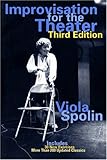
There are two books which I reference for improv advice when needed: Viola Spolin's Improvisation for the Theater
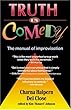
and Charna Halpern's Truth in Comedy.


I just finished a reread of Truth in Comedy: The Manual of Improvisation
and again found it a really insightful look at the improvisation process. For improv players struggling to find their sweet spot onstage, it is a great refresher. Each chapter can stand alone, with take-away points neatly bulleted at the end. (Hint: read the bullets at the end first before the chapter to know what to focus upon in the chapter.) Halpern's description of the Harold and the development of the Harold technique is the best around.


Spolin's book is an essential tome for any improv actor, and should be considered from within its proper context. Note first that Spolin was working with children and the games that are presented are most appropriate for child players and audience. Second, many of her games are simply frameworks, and work best for the stage in combination with one another.

15 January 2009

Twittering Authors

I'm a twitter fan because successful twittering requires you to be concise and interesting, and I hope that practicing these traits through tweeting will improve my writing and my improv. There is a group of people who figured out long ago that your value-per-content ratio had better be pretty high in order to be successful: published authors. How neat it is to see a few of these authors twittering.

Felicia Day, an avid twitterer herself, compiled a Twitter Author List - what a great public service as these authors can be hard to find for oneself. Also this serves as an excellent case study of the power of twitter; in order to create her list, she reached out to her substantial twitter network to find out the twitter addresses of these authors. Together we know all that is known; twitter helps make that accessible.

My recommendations to follow are:


Someone let me know if George R R Martin starts twittering updates about A Dance With Dragons, ok?

Photo credit digitalbear.