08 January 2010

Best Fantasy books of the '00s

There's a compilation of reviews of books of the 00s put up today by Johnny of Tower of the Hand, including a few of my contributions. Following are my reviews extracted to succed or fail on their own; please also check out my co-reviewers posts: Aidan at A Dribble of Ink put in one on Perdido Street Station that I like and Adam across the pond at The Wert Zone contributed a good review on The Shadow of the Wind.  Both books have been hovering on the edges of my TBR pile but now reading their thoughts I should really read them now. Johnny, our blog host, and James from Speculative  Horizons rounded out our reviewing cadre. If you missed these books from the last decade now's the time to set things aright.

Neil Gaiman - American Gods - 2001
American Gods: A NovelAny list of the best books of the decade would be remiss without including Gaiman. But which of his many works to choose? For my money,  I recommend American Gods. For me, that was the book that brought Gaiman to my attention and sent me back onwards to find the Sandman, and made me eager for anything else Gaiman ever writes. Gaiman starts with a character with a mystery heritage a'la Corwyn of Zelazny's masterwork Amber series, adds in all the fables and legends of the 'old world ' - particularly the Norse legends for which I am fond, and gently drops in elegant and mind bending atrocities and humble victories. And he ends it all with a war to end all wars, and a love story ending in a second death. Brilliant. But don't just believe me - the book garnered a Hugo and a Nebula award as well.

Jacqueline Carey - Kushiel's Legacy series - 7 books from 2001 through 2009
So you like your fantasy worlds well thought out and coherent? But you don't want a rehash of the dwarves-elves-humans-
Kushiel's Avatar (Kushiel's Legacy)halflings-and-orcs melange that Tolkien established for the genre? Check out Carey's world building skills, wherein she plays out an alternate reality of Earth, an Earth where angels were made flesh and left their progeny to do as they please - in the catchphrase of the novel, "to love as thou wilt." The geography is similar, the cultures are familiar, but everything is pushed so-slightly askew, so that for example an encounter with her world's version of Vlad the Impaler seems utterly rancid and completely original. Start with Kushiel's Dart, which introduces courtesean Phadre.  The cleverest piece of the work is how little is owed to the supernatural - similar to masterworks like George RR Martin's, there is magic and mysticism but it is rare and otherworldly, more dreamt than lived, and the characters have to get through mainly on their wits and skills.  And her sex scenes are possibly the best written of anything outside of specifically erotic literature, and tend towards the more exotic and unusual encounters. Also of interest is the thriving fan community, including readers who get body art in imitation of the characters. Final kudos: Carey's put out two finished trilogies in this world encompassing two separate story arcs, and shows every indication of completing a third trilogy by next year. She doesn't leave her fans hanging out forever waiting to find out what happens next in the Kushiel's Legacy series (but, sadly, there are no collectible miniatures either).
Neal Stephenson - Anathem - 2009
AnathemFor my last pick of the group, I'll take a risk and choose Anathem, although I have yet to meet someone I've recommended it to who thanked me (although it did win a Locus Award). Have you ever read a book that, for weeks afterwards, you were reminded of in many ways? Or that inspired you to make a movie? This book is like that - I'd read something in a science journal or in the news a month later about hieroglyphs or the North Pole and instantly be put in mind of a scene in the book. Stephenson builds a intricate and complicated world, barely believable in its restrictions and interactions, and then interweaves explanations to make it all plausible. The characters start mildly enough but then become more and more interesting until finally one is reading at a fast pace to find out what happens next to them. Imagine Name of the Rose meets Minority Report (minus Tom Cruise), and you'll have an approximation of the story than what Stephenson provides, but much stupider (and neither Eco nor Dick was writing for idiots). Oh - and although I feel this book fits solidly in the fantasy genre, there's a bit of space travel and science chatter to make the science fiction reader at home.

14 December 2009

Santa Olivia by Jacqueline Carey

I'm an admirer of the Kushiel series, and recently started looking around for other books Jacquline Carey has written. I found Santa Olivia, and decided to pick it up.

I found the story entertaining and engaging, and a quick read. The setting is this: in a future time, but not so very far distant, a disease breaks out with a high mortality rate. In response, the US closes its Southern border with a wall, leaving a span of land as a buffer zone and declares the people within as no longer being US citizens. In this zone various military outposts are built, staffed by Americans within the wall to defend against a deadly but unseen enemy - whether the virus or a mysterious raider known as El Segundo is only to be guessed at. And such guesses should not be made aloud.

A military base puts certain pressures on the surrounding populace, and in such a pressured area as this the strains are nearly visible. One soul takes advantage of the zone to attempt to sneak away; but in passing through, he fathers a child before moving on. He was a hybrid human, a GMO and not technically a citizen but actually property of the US government.

The child grows; the child shows the traits of the father. And the child is tested in ways one might expect are just as harsh as anything the father went through. But one difference remains - she chooses this path, and could leave it if she chose. Her determination and pique make the story arc in a trajectory that is inevitable and still mesmerizing.

I'd recommend this book to any fans of the Kushiel series. The protagonists' parallels to Phèdre are evident, and while the relationships and plottings of the characters are nowhere as nuanced and brilliant as those in the Kushiel series there is a certain prospect of intrigue which is unsettling. I found myself wondering at one point if the child's father was the same as the General, and trying to second guest the motives of the priest as well.

I have a thing for dystopia novels. If you do too - or if like me you're waiting for the next installment from Terre d'Ange - check out Santa Olivia.

30 November 2009

The Time Traveler's Wife by Audrey Niffenegger

I recently read Her Fearful Symmetry and was curious afterwards to go back and re-read The Time Traveler's Wife. For a change, I'm going to review a book based on answering the reader's discussion guide.


1. In The Time Traveler's Wife , the characters meet each other at various times during their lifetime. How does the author keep all the timelines in order and "on time"? 


I read elsewhere that the author opted to use Clare's timeline to anchor the book. Good choice and it makes sense; otherwise following Henry it would be too jumpy.
2. Although Henry does the time traveling, Clare is equally impacted. How does she cope with his journeys and does she ultimately accept them?


She has a very full artistic life, social engagements, family - and she seems widely read in philosophy. Also from early childhood she has debated determinism and fatalism and free will; so these concepts are ones she can reflect upon when her life situation is disrupted.
3. How does the writer introduce the reader to the concept of time travel as a realistic occurrence? Does she succeed?
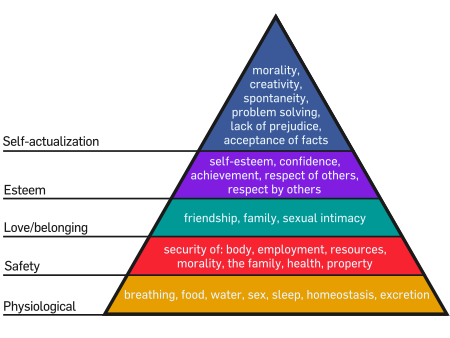
The writer's genius is in introducing the "superpower" of time travel as a disability. The realism of the situation comes from the ordinary and mundane needs that Henry must handle when traveling. He lives most of his life as an intellectual; but with his time travels, he regresses to the base of the Maslovian Pyramid, having to satisfy basic needs of food and shelter.

4. Henry's life is disrupted on multiple levels by spontaneous time travel. How does his career as a librarian offset his tumultuous disappearances? Why does that job appeal to Henry?
The orderliness of the catalog appeals, and the job offers an environment which is comfortable for eccentrics.
5. Henry and Clare know each other for years before they fall in love as adults. How does Clare cope with the knowledge that at a young age she knows that Henry is the man she will eventually marry?

6. The Time Traveler's Wife is ultimately an enduring love story. What trials and tribulations do Henry and Clare face that are the same as or different from other "normal" relationships?

7. How does their desire for a child affect their relationship?

It stresses Henry out immensely and triggers more time traveling; and it risks Clare's life. It makes Clare more precious to Henry, and shows for the first time Clare putting her adult needs over Henry's.


8. The book is told from both Henry and Clare's perspectives. What does this add to the story?


In a He Said, She Said fashion the dual perspectives add depth and context. Although one expects that, as a time traveler, Henry would be nearly omniscient and extremely wise, through is early interactions with Clare he manages to imbue her with a sense of quasi-omniscience as well. This presents Henry as not the most powerful creature in the story - in fact, he is nearly powerless even in front of a small girl.
9. Do you think the ending of the novel is satisfactory?

No, but it did seem necessary and proper - predestined, almost.
10. Though history there have been dozens of mediums used for time travel in literature. Please cite examples and compare The Time Traveler's Wife to the ones with which you are familiar.


I drew a comparison between Time Traveler's Wife and Asimov's End of Eternity. In contrast to EoE, time travel in TTW is disorderly, chaotic, and generally purposeless. Changing the past is impossible in TTW, and the reason for the existence of a whole society in EoE. In EoE, the love interest of Harlan - Noÿs Lambent - is at first seen as a pliant and naive individual, trapped in real-time and ignorant of the larger implications of time travel, much as is Clare. Both Clare and Noÿs have attainted a larger-than-life wisdom and forknowledge by the end of the book.
Reblog this post [with Zemanta]

23 November 2009

Her Fearful Symmetry by Audrey Niffenegger


What a strange story this is. I read it rapidly - the story pulled me in and kept me riveted. It may do the same to you, if you like strangeness - and stories like:
The story begins in a hospital, as Elspeth lies dying with her lover in attendance. She slips into oblivion, but doesn't take her secrets with her. Instead she leaves a collection of journals to her lover, and some requirements in her will involving her twin sister's brood. She's been estranged from her sister, but even so seems to hold a fondness for the children, Julia and Valentina, and has maintained a connection to them through correspondence with her sister.

With this staging, the action begins - with the sure hand of the deceased Elspeth guiding the revolutions of the girls, her lover, and even her sister into her orbit. Her writing The living take their cues from the dead; and the action unfolds with deadly consequences.

When it ends, all the characters lives are reconfigured - some drastically, some in very subtle ways. Relationships have been decimated and resurrected; cowards and heroes come to the fore. But never is the demon that drives the plot exorcised; instead, a destiny shaped of happily ever after awaits.